What Gets Fixed — and How
- Leaking seams and corners — cleaned, dried, and resealed with commercial-grade sealant, or re-mitered when the joint itself has failed
- Sagging runs — re-pitched and re-hung with hidden hangers at proper spacing
- Pulled or bent hangers — replaced and anchored into sound fascia
- Downspout clogs and separations — cleared, re-joined, and re-strapped
- Storm and branch damage — individual sections replaced and color-matched
Every repair visit includes a full-system look. If three sections are failing and the metal is thirty years old, the honest answer is a replacement quote alongside the repair price — the homeowner picks with real numbers in hand.
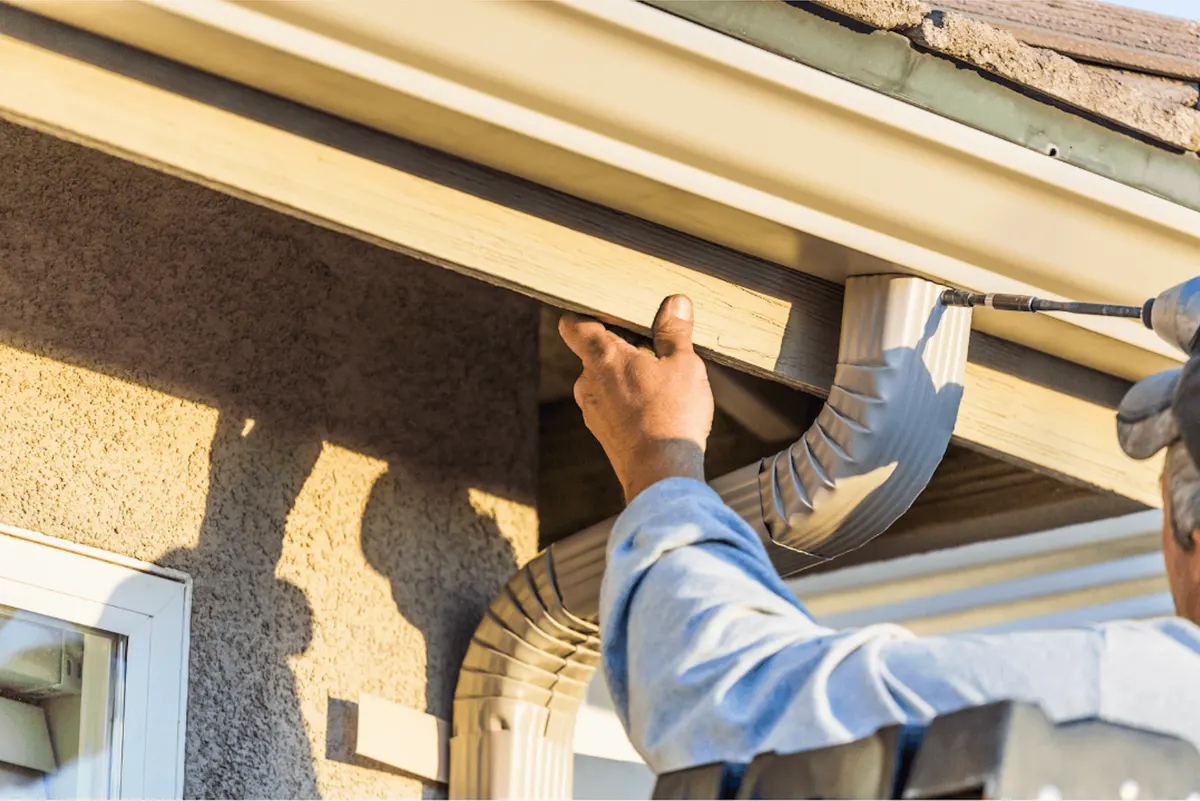
Small Leaks Do Expensive Damage Here
In a drier climate a slow drip behind a gutter is an annoyance. In a region that concentrates nearly all of its roughly 37 to 42 inches of rain into six months, that drip runs for weeks at a time — straight into fascia boards, soffits, and the soil against the foundation. Rot spreads out of sight, and the eventual carpentry bill dwarfs what the repair would have cost. When overflow or staining shows up, the economical moment to act is now, before the next atmospheric river.
Finding the Actual Problem Before Fixing Anything
Water is a misdirection artist — where it shows up is rarely where it got in. A stain at one corner can trace to a pitch problem thirty feet away; "leaking gutters" often turn out to be roof drip-edge gaps sending water behind the system entirely. So every repair visit starts with a diagnostic walk: troughs checked for standing water that betrays bad pitch, seams and end caps inspected, hangers counted and tested, downspouts flow-tested to ground level, and the fascia line probed anywhere staining hints at trouble behind the metal.
The result is a written fix list in plain language — what's failing, why, what it costs to correct, and honestly, what can wait. Half the value of a good repair visit is learning what doesn't need fixing yet.
Where Gutter Repair Ends and Carpentry Begins
Gutters mount to fascia boards, and a gutter that leaked for two North Sound winters has usually shared the experience with the wood behind it. Softened or rotted fascia can't hold hangers — a new gutter screwed into bad wood sags within a season. Repair visits flag fascia condition honestly: surface weathering that's fine to mount into, versus sections that need replacement before any hardware goes back up.
Catching it at the repair stage is the cheap version. The expensive version is discovering it when a loaded gutter pulls free in a January storm and takes the board with it.
If Repair Isn't Enough
Gutter Replacement
When the fix list gets long, replacement pricing is quoted side by side.
Gutter replacement →Frequently Asked Questions
Is it a leak or an overflow?
Water over the front edge in heavy rain usually means a clog or undersized system; water behind the gutter or at joints means a genuine leak or pitch problem. The assessment identifies which — they have very different fixes and prices.
Can one damaged section be replaced without redoing everything?
Usually yes. Individual runs can be re-fabricated and color-matched to the existing system, provided the surrounding metal is sound.
What does gutter repair cost?
Simple reseals and hanger fixes commonly land in the low hundreds; re-pitching long runs or replacing sections costs more. Every repair is quoted in writing before work starts.
Why does my gutter still leak after being resealed?
Usually one of three reasons: sealant applied over damp or dirty metal, a joint that's moving because hangers nearby have loosened, or water actually entering behind the gutter from a drip-edge gap. Diagnosis before sealant is the difference.
Can rotted fascia be fixed during a gutter repair?
Small sections are often handled in the same visit; larger runs of rot are flagged with a clear scope so the carpentry gets done right before hardware goes back into the wood.